
Spotted Lanternfly Treatment
About the Spotted Lanternfly
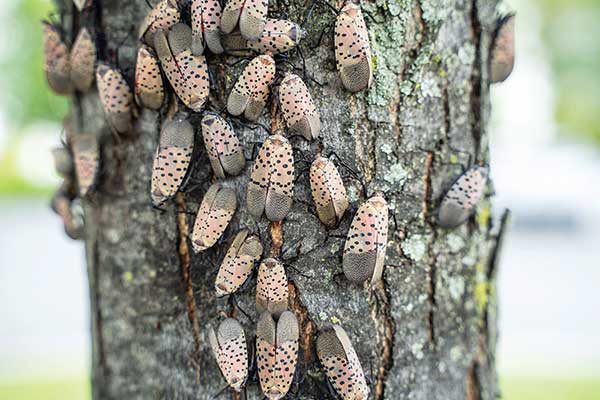
The spotted lanternfly (Lycorma delicatula) is native to Asia and was first found in Pennsylvania in September 2014.
Since then, populations of spotted lanternfly have reached serious levels throughout NJ and have led to severe damage to trees and certain crops. They have become a terrible nuisance to land and homeowners by damaging trees and landscaping and ruining the enjoyment of outdoor activities.
The spotted lanternfly’s favorite food source is the tree of heaven, but they also are known to feed on fruit trees, red and silver maples, birch, willow, black walnut, grapevines, roses, and others.
Honeydew and Sooty Mold
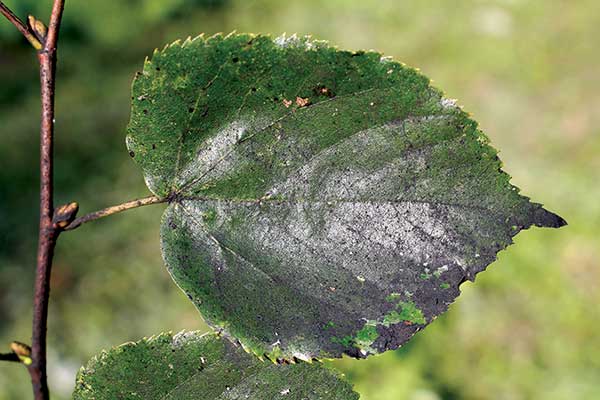
The Spotted Lanternfly sucks the sap out of the tree and excretes partially digested tree sap called honeydew onto your valuable landscaping, decks, patios, patio furniture, cars, and sheds.
This sticky sugary substance attracts wasps, hornets, bees, and ants. A black fungus called sooty mold grows on the honeydew and accumulates under spotted lanternfly infestations.
This can dramatically affect your landscaped plantings and their ability to photosynthesize; it weakens them and affects their ability to survive.
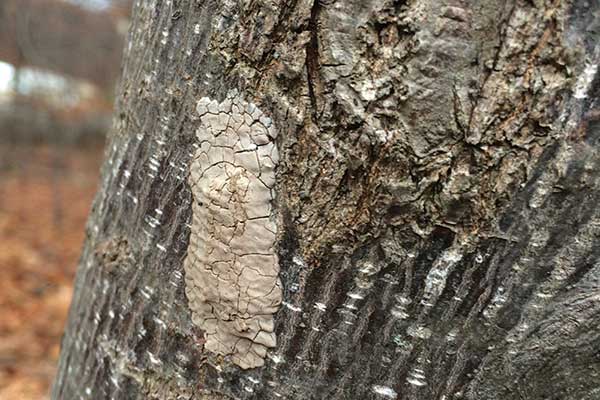
Spotted Lanternfly Egg Masses
Spotted Lanternfly Life Cycle
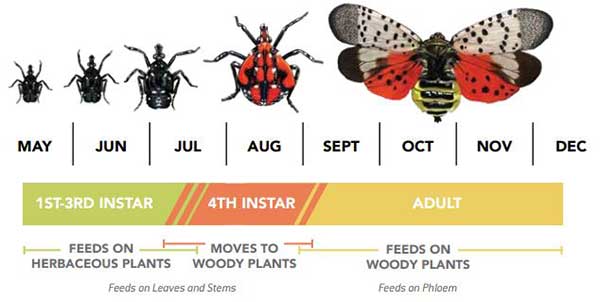
The spotted lanternfly goes through the various stages of life. As they do, their feeding habits change.
Early in the season, they are commonly found on understory plants, feeding on the soft stems and leaves.
As they progress into their 4th instar and adult phases, they prefer to feed on woody trunks and branches, sucking the sap directly out of the phloem with their piercing mouthparts.